
ABOUT
About
The Newfoundland and Labrador Pharmacy Museum is located in Apothecary Hall, a heritage building constructed in 1922. It features Art Deco and Art Nouveau styles and has retained its original maple flooring and tin pressed ceilings.
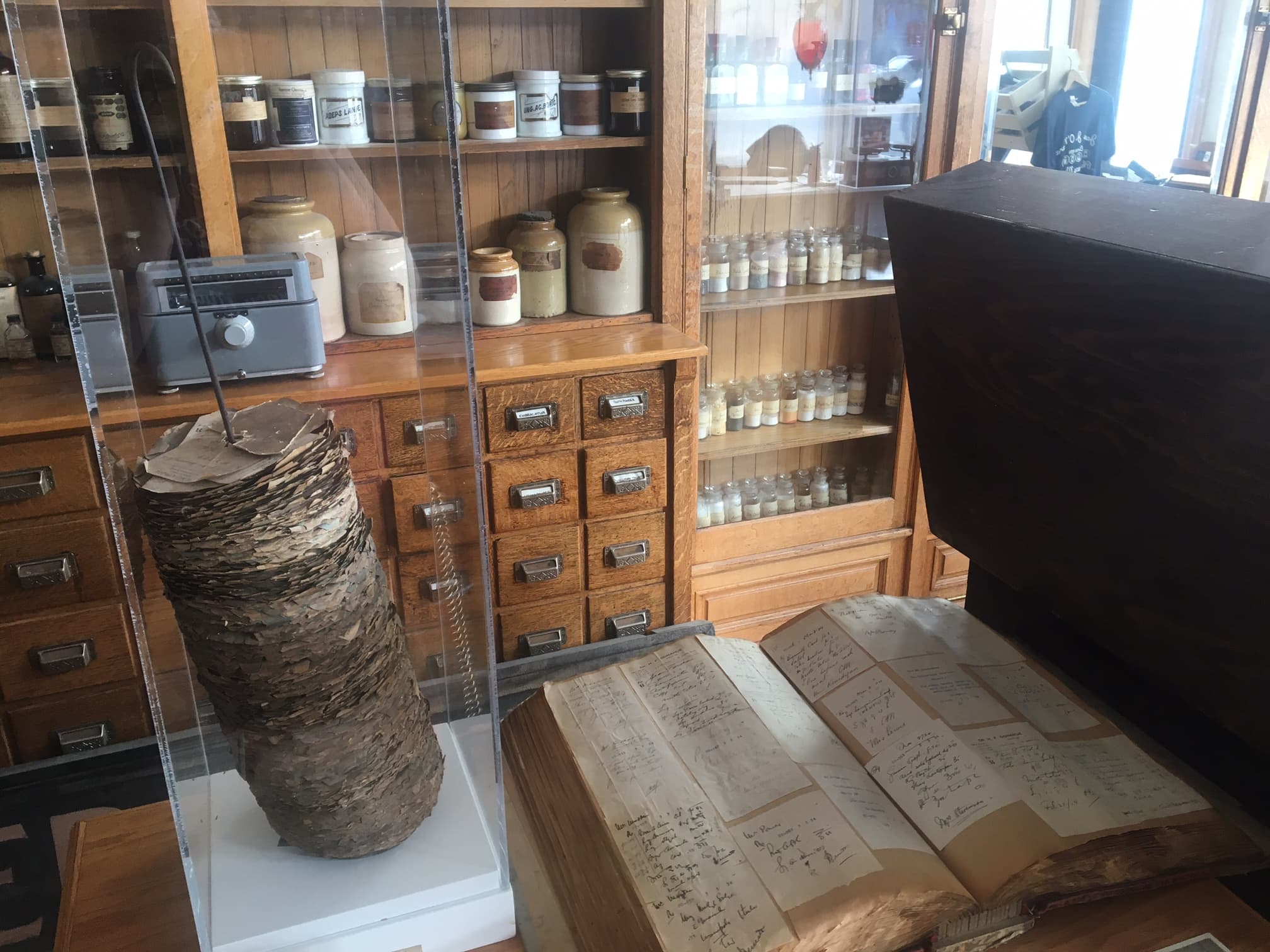
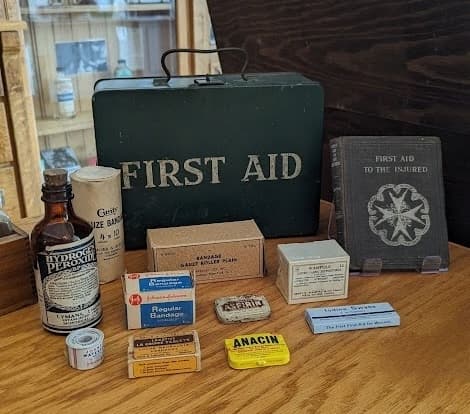
In the museum you will discover both in-house and commercial pharmaceuticals from the past 100+ years, mortars and pestles, scales and tablet presses, perfumes and cosmetics, and two ornate show globes from the early 1900’s.
Mission
Our mission is to preserve and share the history of evolution of trusted pharmacy practice as it was experienced in Newfoundland and Labrador.
Our Core Values
Core Value
Honour
We honour pharmacy practice by offering a glimpse into how pharmacy care advanced through the years.
Core Value
Honour
We honour pharmacy practice by offering a glimpse into how pharmacy care advanced through the years.
Core Value
Preserve
We take great pride in preserving and displaying the treasured pharmacy antiques and artifacts that have stood the test of time.
Core Value
Preserve
We take great pride in preserving and displaying the treasured pharmacy antiques and artifacts that have stood the test of time.
Core Value
Trust
We tell the story through our collections of how pharmacy professionals came to be trusted community members.
Core Value
Trust
We tell the story through our collections of how pharmacy professionals came to be trusted community members.
History of the Building
At the time of the Great Fire in St. John’s in 1892, there were about eight drug stores operating in the city. All but two were destroyed by that fire, which nearly destroyed the entire city. Soon afterwards, the process of rebuilding the city began, with several drug stores reopening in temporary locations until new premises were constructed.
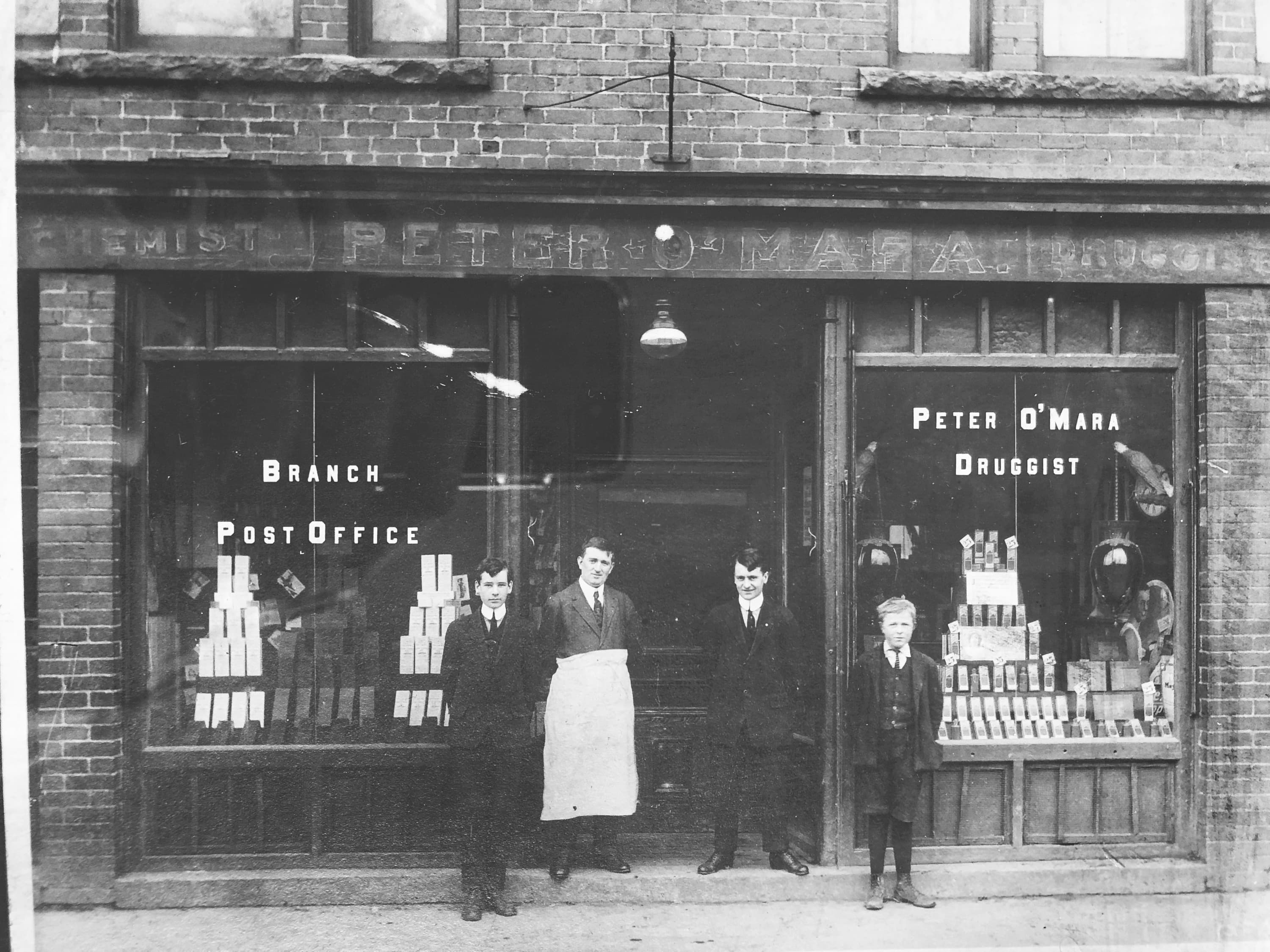
In 1899, West End Drug Store was established at 484-486 Water Street and was owned and operated by Lawrence Hannaford. It was purchased in 1905 by Peter O’Mara, but he eventually outgrew the location and decided to build a new drug store on vacant land close by.
Thus, Apothecary Hall, at 488 Water Street on the corner of Brennan Street, was built and housed the Peter O’Mara Drug Store from 1922 until 1986. This was one of the last surviving old drug stores to operate in the province and the building is the last remnant of the urban commercial streetscape of Water Street West.
The building was designed by John E. Hoskins, a well-known local architect, who at the time was employed by the Reid Newfoundland Company, operators of the Newfoundland Railway. The firm of M. & E. Kennedy, Contractors and Builders was engaged to construct it.
During the last half of the 19th century and the early part of the 20th century, drug stores in Newfoundland operated like their British counterparts because most early druggists had emigrated from the British Isles. They designed the stores in similar styles, purchased goods for sale from England, and followed an apprenticeship training system. Peter O’Mara was familiar with the British style and practice, having been an apprentice and later employee at the Thomas McMurdo and Company drug store in St. John’s. He decided to build his store to resemble drug stores of the period just before the Great Fire. Later, he also added living quarters on the second floor.
The building architecture is a form of Art Nouveau and Art Deco amalgam and is particularly interesting because of its exterior decoration. It appears to have direct European architectural influence. Being somewhat individualistic, it is almost reminiscent of the Charles Rennie MacKintosh restrained (celtic) variation of Art Nouveau.
The building was piped for gas during construction but it was never lit by gas lights. It was a common practice in drug stores to use gas to produce distilled water and in the preparation of some compounded medicines. The original coin operated gas meter can be seen in the museum, as well as the ornate embossed tin ceilings. The flooring is maple hardwood and has withstood the considerable traffic quite well. The light fixtures in the building are reproductions of turn of the century gas lights, which have been converted to electric. The second floor of the building is now commercial space. Both rooms have original fireplaces; one being an Art Deco fireplace, the other of Bauhaus design. And down in the basement, which was used for storage, there is a large walk-in vault.